|
|
 |
 |
Living with an Uncertain Monsoon
|
In May and June each year, speculation about the coming of the monsoon fills newspapers and conversations across India. Urban dwellers eagerly await respite from overbearing heat. Investors scrutinize forecasts, trying to anticipate possible impacts on food prices. But none have more at stake than India’s more than 100 million farming households.
In India, where more than 60% of agricultural land is rainfed and the average farm size is only 3.5 acres, a failed monsoon often means complete loss of a crop. Recent increases in suicides among heavily indebted farmers have highlighted the extreme desperation in some areas. A lackluster monsoon can seriously impact food prices and India’s overall economic growth.
|
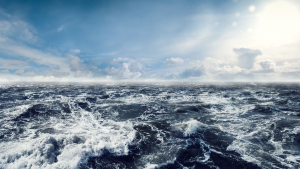
Sea-level rise has the potential to reshape the coastal environment. Credit: NOAA
NOAA’s Sea Grant Awards Eight ‘Climate Engagement’ Mini-Grants -- Coastal residents, businesses and decision-makers around the country will consider how their communities can adapt to climate change through eight newly awarded NOAA National Sea Grant College Program grants.
Each of these $25,000 climate engagement mini-grants will support projects focused on preparing for changing climate conditions. The projects will be led by principal investigators from local Sea Grant programs and NOAA Regional Collaboration Teams in eight regions including Alaska, the Pacific Islands and sections of the mainland United States.

President Proposes Key Investments in NOAA 2011 Budget Strengthening science and innovation for the global economy -- President Obama today released the 2011 proposed budget for NOAA, requesting $5.6 billion for the nation’s oceanic and atmospheric agency. The request includes investments to strengthen NOAA’s science, promote economic development, strengthen energy and security, sustain oceans and coasts, and protect lives and livelihoods.
“This budget reflects the commitment of the president and secretary of commerce to job creation, science and the environment,” said Jane Lubchenco, Ph.D., under secretary of commerce for oceans and atmosphere and NOAA administrator. “NOAA’s innovations in science and technology have been instrumental in ensuring that a strong economy and a healthy environment go hand in hand. This request will build on that track record as we meet the demands of a changing world.”
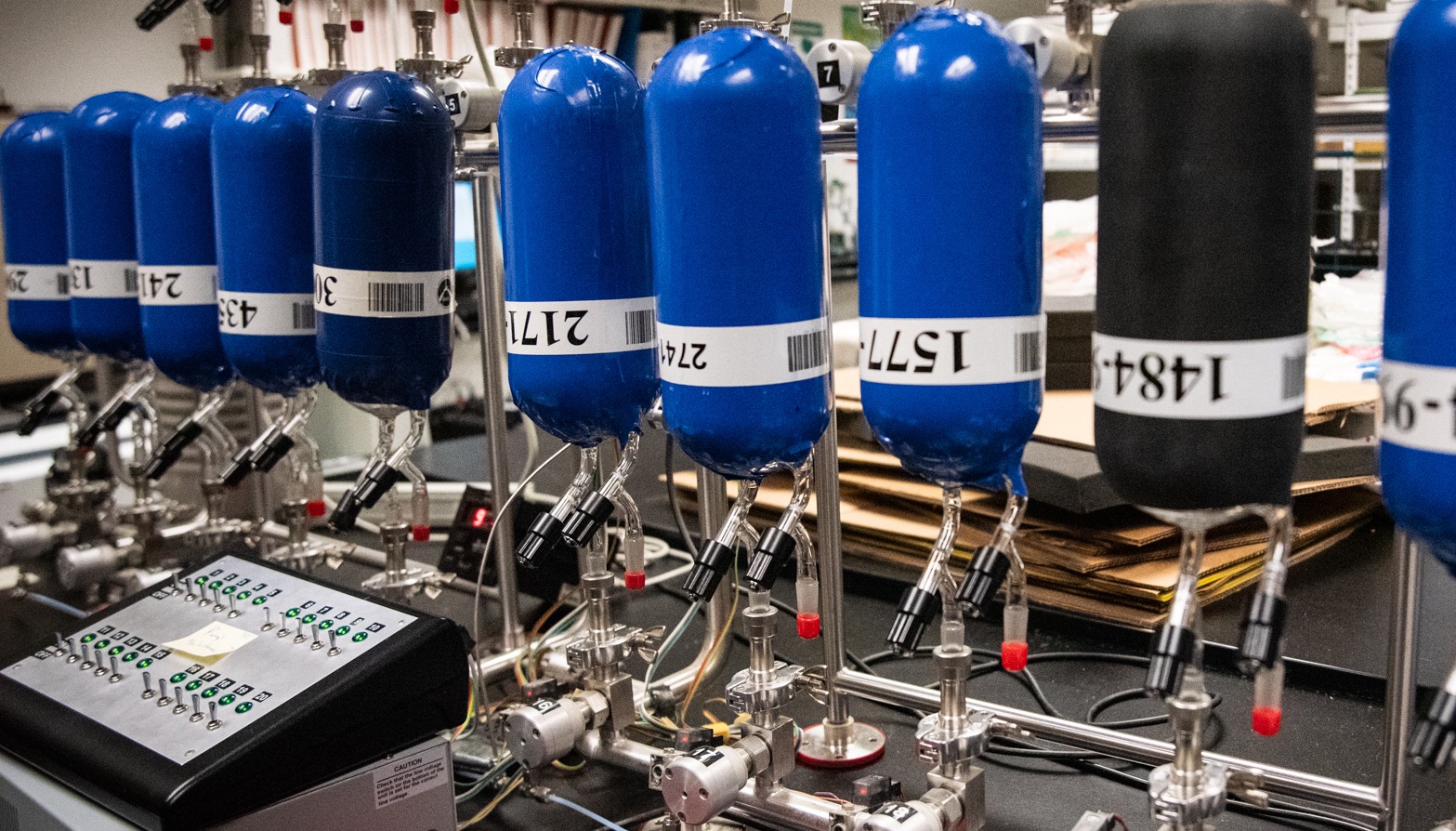
Inspecting the balloon payload for flight worthiness. Credit: NOAA
Stratospheric Water Vapor is a Global Warming Wild Card -- A 10 percent drop in water vapor ten miles above Earth’s surface has had a big impact on global warming, say researchers in a study published online January 28 in the journal Science. The findings might help explain why global surface temperatures have not risen as fast in the last ten years as they did in the 1980s and 1990s.
Observations from satellites and balloons show that stratospheric water vapor has had its ups and downs lately, increasing in the 1980s and 1990s, and then dropping after 2000. The authors show that these changes occurred precisely in a narrow altitude region of the stratosphere where they would have the biggest effects on climate.
The drilling rig and apparatus neded to drill the hole into the snow and into which the sampling tubes are inserted. Credit: NOAA
Emissions of Potent Greenhouse Gas Increase Despite Reduction Efforts Byproduct of refrigerant chemicals remains in the atmosphere 300 years -- Despite a decade of efforts worldwide to curb its release into the atmosphere, NOAA and university scientists have measured increased emissions of a greenhouse gas that is thousands of times more efficient at trapping heat than carbon dioxide and persists in the atmosphere for nearly 300 years.
The substance HFC-23, or trifluoromethane, is a byproduct of chlorodifluoromethane, or HCFC-22, a refrigerant in air conditioners and refrigerators and a starting material for producing heat and chemical-resistant products, cables and coatings.
Picture This: NOAA, Google Join Forces to Visualize Scientific Data -- NOAA’s Office of Oceanic and Atmospheric Research and Google have signed a cooperative research and development agreement outlining how they will work together to create state-of-the-art visualizations of scientific data to illustrate how our planet works.
“It is said that a picture is worth a thousand words. Here, we think NOAA’s billions of bits of data are worth thousands of pictures,” said Richard W. Spinrad, Ph.D., NOAA assistant administrator for oceanic and atmospheric research. “Through this agreement, Google’s technical expertise will help to improve access to NOAA data in ways that allow the scientific community and the public to better use our information to understand earth science and make informed decisions.”
Maintaining an active constituent relations program ensures that OAR and NOAA leadership communicate effectively and often with their most important customers. The recent Sustaining Observations Roundtable solicited input to help ensure NOAA can sustain and advance our observing systems to meet evolving user needs and applications.
|
NOAA Research Matters PODCASTS
Two NOAA Scientists to Receive Presidential Award
Research scientists studying improvements in tornado forecasting and new radar systems at the NOAA National Severe Storms Laboratory in Norman, Okla., Michael C. Coniglio and Pamela L. Heinselman, were named as recipients of the 2008 Presidential Early Career Award for Scientists and Engineers (PECASE).
The award is the highest honor bestowed by the United States government on outstanding scientists and engineers in the early stages of their careers.
Michael Coniglio and Pamela Heinselman, NOAA National Severe Storms Laboratory in Norman, Okla.
Subscribe
to NOAA Research Podcasts [RSS] 
|